Agent block: The cost of inaction
The cost of inaction block creates a personalized summary of what happens if they take no action at all.
Your buyer will feel a sense urgency to keep the momentum moving based on what the sticking in the status quo means for their business and team.
What this block does
This block reads the call transcripts (and any emails or notes from your CRM) to generate a concise, buyer-facing summary of why taking no action hurts the most.
This includes information such as:
Re-emphasizing the current state of things
Highlights data discussed in the demos
Reminds of what continues to fail if no action is taken
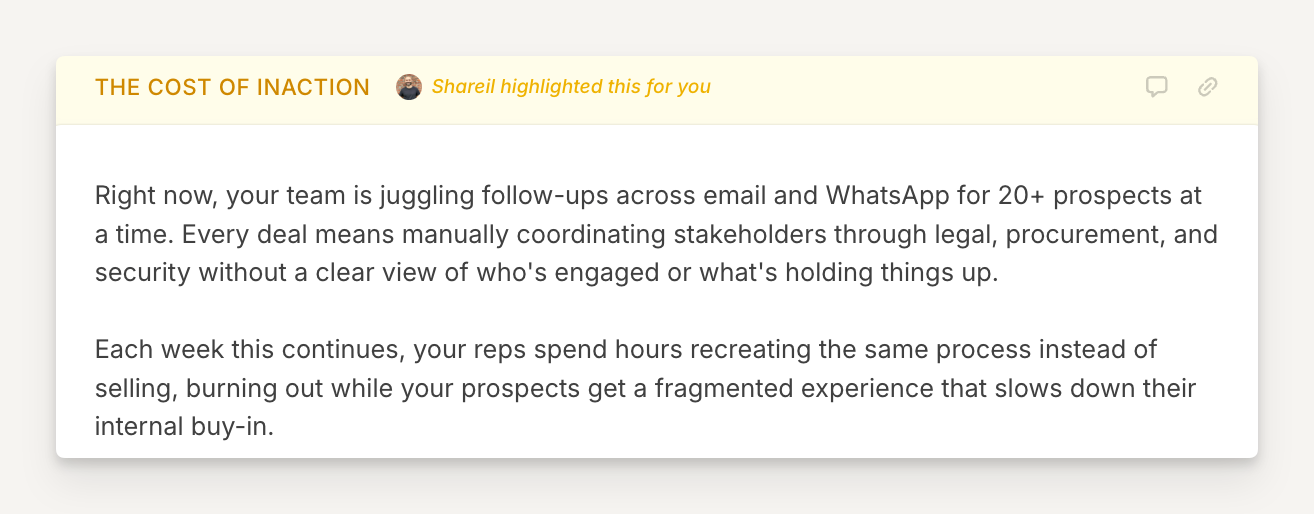
Here is an example of a The cost of inaction block based on the configuration that follows below:
Why use it
Buyers often feel and share a pain during the demo, but can get distracted by any number of other priorities afterwards.
Seeing a personalized summary of impact of taking no action is a reminder why they reached out in the first place.
💡 Pro tip: This block works best when created after an initial demo or follow-up call.
How to set it up
After adding an Agent block to your template:
Title the block "Next steps"
Add the agent instructions (copy prompt below)
Hit Next
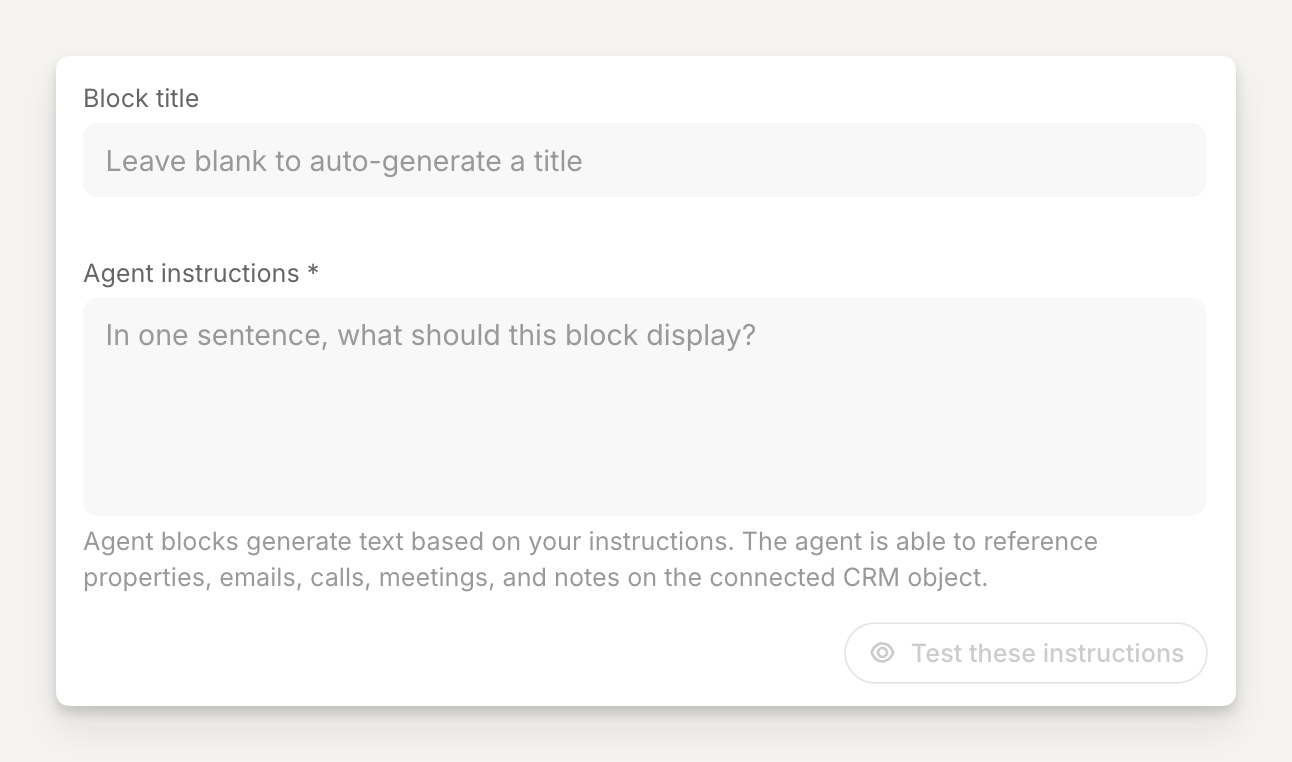
The starting point for the agent block will look something like this:
Copy and paste these Agent instructions
Block title:
The cost of inaction
Agent instructions:
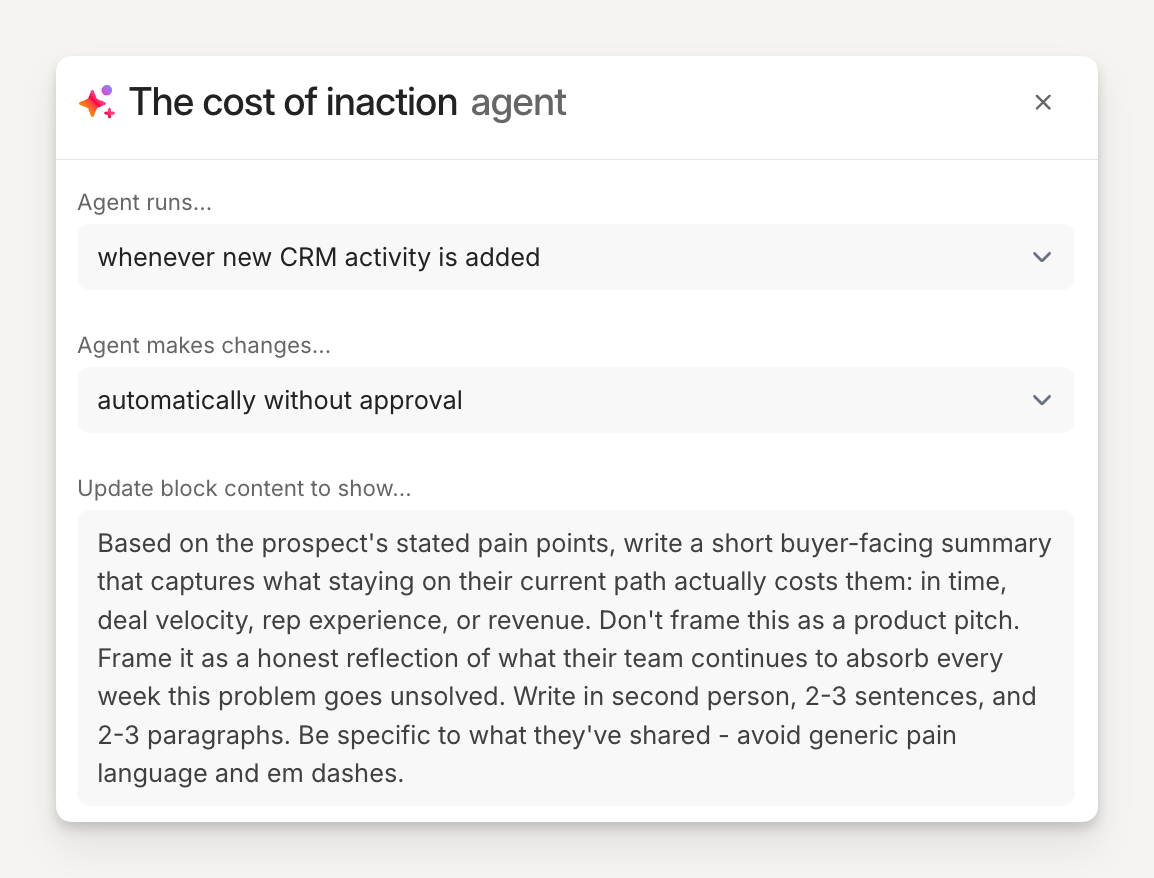
Based on the prospect's stated pain points, write a short buyer-facing summary that captures what staying on their current path actually costs them: in time, deal velocity, rep experience, or revenue. Don't frame this as a product pitch. Frame it as a honest reflection of what their team continues to absorb every week this problem goes unsolved. Write in second person, 2-3 sentences, and 2-3 paragraphs. Be specific to what they've shared - avoid generic pain language and em dashes.
Configuration
Tell the agent when to run and when to make changes.
In this example, we want the agent to run whenever new CRM activity is added and automatically make the changes to the block so it is always in the most current state!